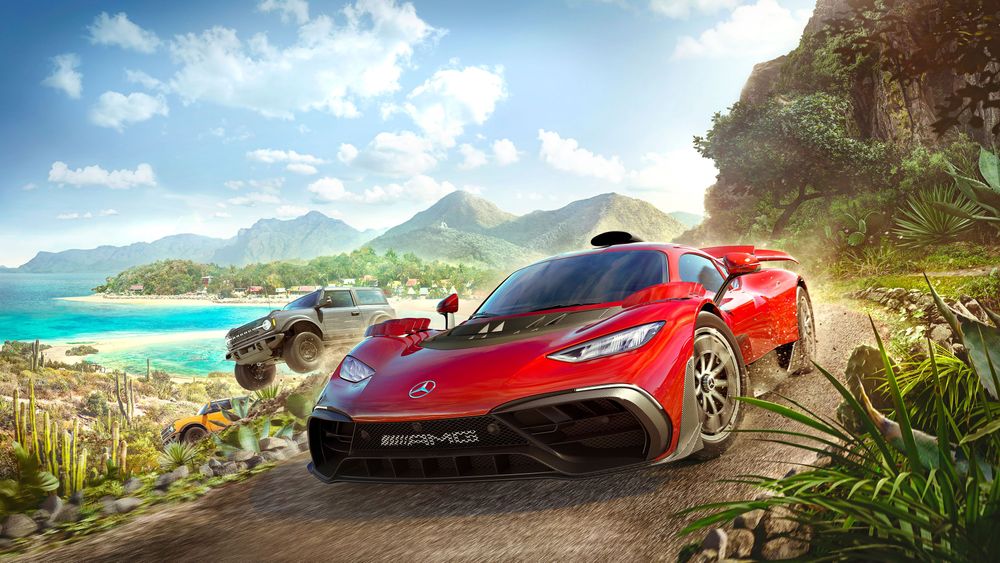
Forza Horizon 5 Tuning Guide: Tires, Gearing, Suspension & Differential
Forza Horizon 5 tuning guide covering tire pressure, gearing, alignment, anti-roll bars, springs, damping, differential, aero, drivetrain balance, telemetry and how to test one change at a time.
Forza Horizon 5 Tuning Guide: Tires, Gearing, Suspension & Differential
Forza Horizon 5 Tuning Guide: Tires, Gearing, Suspension & Differential
Forza Horizon 5 tuning works best when you begin with a clear problem. Do not change every slider because a car feels slow. First identify whether the issue is braking, turn-in, mid-corner balance, exit traction, gearing, stability over bumps or straight-line speed.
Start With a Baseline
Before making major tuning changes:
- Use a car you already understand.
- Choose one repeatable route or Rivals event.
- Run several laps.
- Note where the car becomes difficult.
- Save the original setup if possible.
A baseline lets you tell whether the tune actually improved the car instead of simply making it feel different.
Match the Tune to the Discipline
Forza Horizon 5 includes Road Racing, Dirt Racing, Cross Country, Street Racing and other activities.
A road setup does not need the same suspension, tire or gearing behavior as a Cross Country build.
Tire Pressure
Tire pressure changes how the tire behaves under load and temperature.
The correct pressure depends on:
- Tire compound.
- Vehicle weight.
- Surface.
- Driving style.
- How much heat the tires build during a run.
Use telemetry and repeated testing rather than assuming one pressure works for every car.
Watch Tire Temperature
Tire temperature can help reveal whether a setup is operating evenly.
After several consistent corners, check whether the tires are heating predictably rather than judging the tune after the first turn.
Gearing
Gear ratios determine how quickly the car accelerates through each part of the speed range.
Shorter gearing usually improves acceleration but can reduce the useful top end of each gear. Longer gearing can support more speed but may make the car slower to accelerate.
Final Drive
The Final Drive changes the overall gearing of the car.
Use it to match the transmission to the route:
- Technical routes may benefit from stronger acceleration.
- High-speed routes need enough gearing to avoid reaching the limiter too early.
Tune the Gears You Actually Use
A car may have many gears, but not every gear matters equally on every route.
Pay attention to which gears you use out of slow corners, during medium-speed sections and on the longest straight.
Alignment
Alignment settings can influence tire contact and steering behavior.
Common adjustable areas include:
- Camber.
- Toe.
- Caster.
Make small adjustments. Large alignment changes can make the car unstable or create unnecessary tire behavior.
Camber
Camber affects how the tire contacts the road when the suspension loads during cornering.
Too much negative camber can reduce straight-line contact, while too little may reduce effective contact during hard cornering.
Use tire telemetry to judge the result.
Toe
Toe changes the direction the wheels point relative to the centerline of the car.
Small amounts can affect turn-in or stability, but aggressive toe settings can make the car nervous and increase drag.
Caster
Caster influences steering feel and how camber changes while steering.
Adjust it gradually and test whether the car becomes easier or harder to place through long corners.
Anti-Roll Bars
Anti-roll bars help control how much the body rolls across the front and rear axles.
They are useful for changing mid-corner balance.
If the car pushes wide, investigate the front-to-rear balance instead of automatically adding more steering input.
Springs
Spring settings affect how the suspension supports the car.
A road car on smooth pavement can usually tolerate a different spring approach from a Cross Country vehicle dealing with large bumps and landings.
Do not make an off-road car so stiff that it cannot absorb the surface.
Ride Height
Lower ride height can improve some road behavior, but the car still needs enough suspension travel for the terrain.
For Dirt and Cross Country builds, ground clearance becomes much more important.
Damping
Damping controls how quickly the suspension moves.
The two important concepts are:
- Rebound: how the suspension extends after compression.
- Bump: how the suspension responds while compressing.
If the car bounces repeatedly, becomes unstable over curbs or reacts harshly to uneven ground, damping may need attention.
Aerodynamics
Adjustable aero can trade straight-line speed for additional high-speed grip.
Use more downforce when the route rewards high-speed cornering and less when straight-line efficiency is more important.
Differential
Differential tuning affects how driven wheels behave under acceleration and deceleration.
On AWD cars, center differential balance also affects how much power is sent toward the front or rear.
Acceleration Differential
The acceleration setting changes wheel behavior while power is being applied.
Too aggressive a setting can reduce corner-exit control. Too little locking can prevent the car from putting power down effectively.
Deceleration Differential
The deceleration setting affects the car when you lift or brake.
Use it to refine entry balance after you have already confirmed that your braking points are reasonable.
AWD Balance
AWD builds allow you to alter front-to-rear torque distribution.
More rear bias can make the car feel more rotation-friendly, while greater front contribution can increase stability but may also create more understeer depending on the rest of the setup.
Brakes
Where brake tuning is available, brake balance and pressure can change how the car behaves under heavy braking.
Before changing them, confirm that your braking technique is consistent.
Telemetry
Telemetry is one of the best tuning tools in Forza.
Use it to inspect:
- Tire temperature.
- Suspension movement.
- Gearing.
- Wheelspin.
- Vehicle balance.
Change One System at a Time
A good tuning process is:
- Run a baseline.
- Identify one problem.
- Change one relevant setting.
- Repeat the same test.
- Compare lap time and control.
- Keep or revert the change.
Do Not Tune Around Driver Error
If you enter every corner too quickly, no suspension tune will completely fix the resulting understeer.
Make sure the car problem is repeatable before adjusting the setup around it.
Road Tuning Priorities
- Predictable braking.
- Strong turn-in.
- Stable mid-corner balance.
- Good exit traction.
- Gearing matched to the circuit.
Dirt Tuning Priorities
- Traction on loose surfaces.
- Suspension compliance.
- Stable transitions between dirt and pavement.
- Useful acceleration.
Cross Country Tuning Priorities
- Ground clearance.
- Suspension travel.
- Landing stability.
- Traction.
- Control over uneven terrain.
Common Tuning Mistakes
- Changing every setting at once.
- Tuning for maximum top speed when the route is technical.
- Lowering a car too far for off-road terrain.
- Ignoring tire behavior.
- Copying a tune without understanding what it was designed for.
- Judging a setup from one lap.
Bottom Line
Forza Horizon 5 tuning is problem solving. Establish a baseline, identify where the car is losing time and adjust the system connected to that problem. Tires, gearing, suspension and differential all interact, but changing them methodically produces a much better result than moving every slider at once.